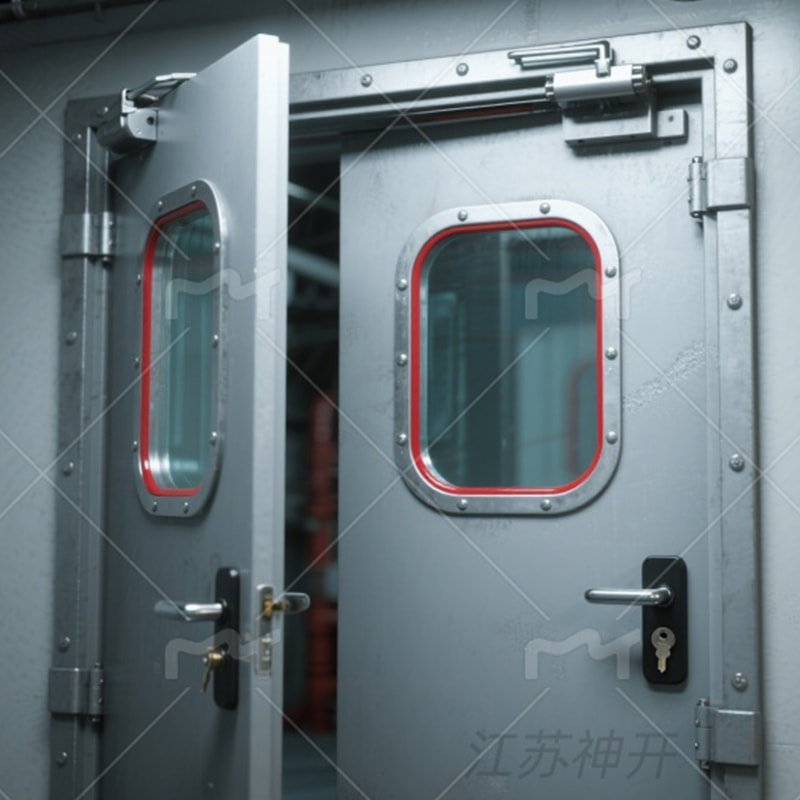

Marine ventilation is the engineered system of airflow, ducting, and piping that supplies fresh air to enclosed spaces aboard vessels while expelling heat, fumes, moisture, and combustion gases. Without correctly designed marine ventilation, crew spaces become dangerously oxygen-depleted, machinery rooms accumulate explosive vapours, and cargo holds develop condensation that destroys goods or accelerates structural corrosion. Getting marine ventilation right — including the correct specification of marine ventilation pipes — is not optional engineering: it is a flag-state and class-society requirement under SOLAS Chapter II-2 and the IMO Fire Safety Systems Code.
This guide covers every practical aspect of marine ventilation systems and the pipes that carry them: regulatory requirements, system types, pipe materials and sizing, fire dampers, installation standards, and maintenance practice.
The marine environment creates ventilation hazards that do not exist in shore-based buildings. Vessels are sealed steel structures with high heat loads from machinery, volatile fuel vapours from tanks, salt-laden humid air, and confined spaces that can turn lethal within minutes if ventilation fails.
Marine ventilation systems on commercial vessels are governed by a layered framework of international conventions, class society rules, and flag-state legislation. Understanding which rules apply is the starting point for any design or retrofit project.
| Regulation / Standard | Issuing Body | Key Ventilation Requirements |
|---|---|---|
| SOLAS Chapter II-2 | IMO | Fire dampers at A/B class divisions; remote closure; ventilation of paint lockers and flammable liquid stores |
| IMO FSS Code (Chapter 8) | IMO | Fire damper construction, materials, temperature ratings, and test requirements |
| SOLAS Regulation II-1/35 | IMO | Ventilation of spaces containing electrical equipment and batteries |
| ILO MLC 2006, Standard A3.1 | ILO | Adequate ventilation in crew accommodation; mechanical ventilation required where natural ventilation is insufficient |
| DNV Rules Pt.4 Ch.5 | DNV | Machinery space ventilation rates, duct material specifications, fan redundancy requirements |
| Lloyd's Register ShipRight | Lloyd's Register | Duct penetration sealing, hangar ventilation on ro-ro vessels, hazardous area classification |
For recreational and commercial vessels under 24 metres, ISO 9094 (fire protection) and ISO 15084 (ventilation of petrol engine and fuel tank spaces) provide equivalent guidance to the SOLAS framework.
Marine ventilation systems fall into three principal categories, often combined in practice to meet the different requirements of different spaces on the same vessel.
Natural ventilation relies on wind pressure and thermal buoyancy to drive airflow through cowl ventilators, mushroom heads, or fixed louvers into and out of the space. It requires no power and has no moving parts, making it reliable for dry cargo holds, chain lockers, and some crew spaces. However, its effectiveness is entirely dependent on vessel speed, wind direction, and ambient temperature differentials — making it unsuitable as the sole ventilation method for machinery spaces, battery rooms, or flammable vapour spaces, where SOLAS mandates mechanical systems.
The minimum natural ventilation opening area for a cargo hold under IMO guidelines is typically calculated as 0.5% of the deck area for general dry cargo, rising to 2% for timber deck cargoes where moisture management is critical.
Mechanical ventilation uses centrifugal or axial fans to force or extract air through a duct network at controlled flow rates. It is mandatory for machinery spaces, accommodation, hospital spaces, and all hazardous areas. Design parameters include:
On passenger vessels, naval ships, and modern offshore platforms, full HVAC (heating, ventilation, and air conditioning) systems provide temperature and humidity control alongside fresh air supply. These systems use central air handling units (AHUs) with chilled water cooling coils, electric or steam heating elements, and multi-zone duct networks distributing conditioned air to individual cabins and common areas. Fresh air intake on HVAC systems is typically 15–20% of total supply airflow, with the remainder recirculated through filters — a design that significantly reduces the energy cost of conditioning marine air in extreme climates.
Marine ventilation pipes and ducting form the physical infrastructure through which ventilation airflow is distributed. The selection of pipe material, wall thickness, and jointing method must reflect the space being served, the fire rating required, and the corrosive marine environment.
The default material for ventilation ducting in machinery spaces and cargo areas on commercial vessels. Class society rules (DNV, Lloyd's Register, BV) specify minimum wall thicknesses based on duct diameter:
| Duct Diameter (mm) | Min. Wall Thickness — General Spaces (mm) | Min. Wall Thickness — A-Class Fire Zones (mm) |
|---|---|---|
| Up to 200 | 0.8 | 1.0 |
| 201–400 | 1.0 | 1.2 |
| 401–750 | 1.2 | 1.5 |
| Over 750 | 1.5 | 2.0 |
Galvanised steel (hot-dip zinc coated to ISO 1461) is standard for accommodation and general service ducting, providing adequate corrosion resistance in non-saline airstreams. Bare mild steel with internal epoxy paint is used in machinery spaces where temperatures may compromise zinc coatings. Stainless steel 316L ducting is specified for exhaust ducts in gas-dangerous spaces and wet areas such as galley extract systems handling grease-laden air.
Aluminium alloy 5052 or 6061 ducting is used extensively in accommodation areas of passenger vessels and superyachts, where weight saving is a priority. Aluminium ducting weighs approximately 35% less than equivalent steel sections and forms a natural oxide layer that resists salt-air corrosion without additional coating. The critical limitation is fire rating: aluminium melts at approximately 660 °C and is not permitted in A-class fire zone penetrations — steel ducting with fire insulation or intumescent collars must be used at division penetrations.
Flexible duct connections — typically wire-reinforced PVC, aluminium foil laminate, or stainless steel bellows — are used at fan inlet and outlet connections to isolate vibration, accommodate thermal expansion, and allow minor misalignment between rigid duct sections. Maximum permitted length for flexible sections is 600 mm in most class rules to prevent flow resistance and sagging. PVC flexible duct is not permitted in machinery spaces or other fire-risk areas — only metal-core flexible sections are acceptable.
GRP ventilation pipes and ducting are increasingly used in offshore installations and chemical tankers where resistance to aggressive chemical atmospheres is required. GRP is inherently corrosion-resistant, thermally non-conductive, and can be manufactured in diameters up to 1,500 mm for large-volume cargo hold ventilation. Fire performance is the principal concern: GRP must meet IMO Resolution A.753(18) fire test requirements to be approved for use in or adjacent to fire zones, and the specific resin and laminate construction must be verified against the class society approval documentation.
| Material | Corrosion Resistance | Fire Rating | Relative Weight | Typical Application |
|---|---|---|---|---|
| Mild / galvanised steel | Moderate (coating dependent) | A-class capable (insulated) | High | Machinery spaces, cargo holds, fire zones |
| Stainless steel 316L | Excellent | A-class capable (insulated) | High | Galley extract, gas-dangerous spaces |
| Aluminium 5052 / 6061 | Good (salt-air) | Not A-class rated | Low | Passenger accommodation, superyachts |
| GRP (approved resin) | Excellent (chemical) | IMO A.753(18) (type-approved) | Low–Medium | Chemical tankers, offshore, large cargo holds |
| Flexible (metal-core) | Good | Limited (connection use only) | Very Low | Fan connections, vibration isolation |
Correct duct sizing is the engineering core of marine ventilation design. An undersized duct creates excessive velocity, noise, and fan back-pressure; an oversized duct wastes space, adds weight, and may not maintain adequate flow velocity to prevent moisture condensation in horizontal runs.
For a machinery space requiring 50,000 m³/h of ventilation air via a main supply duct at a design velocity of 8 m/s:
Total system pressure loss — the sum of friction losses in all straight duct runs plus dynamic losses at bends, branches, and terminal grilles — must be calculated to select the fan duty point. A typical machinery space ventilation system will have a total system resistance of 200–500 Pa, while an accommodation HVAC system may run at 100–300 Pa.
Every ventilation duct that penetrates an A-class or B-class fire division must be fitted with a fire damper — this is a non-negotiable SOLAS requirement. Fire dampers are the most safety-critical component in the entire marine ventilation pipe network, and their specification, installation, and maintenance are subject to strict class society survey requirements.
Certain spaces aboard vessels have ventilation requirements that go beyond the general rules, driven by specific hazards associated with their function.
Ro-ro (roll-on/roll-off) enclosed vehicle decks present one of the highest ventilation challenges in marine design. Carbon monoxide and hydrocarbon vapours from vehicle exhausts during embarkation and disembarkation must be diluted rapidly to safe levels. IMO Resolution MSC.1/Circ.1515 and SOLAS II-2/20 require a minimum of 10 air changes per hour during vehicle operations and 6 air changes per hour as a continuous background rate. Fans must be capable of operating independently for each deck section and must have remote start capability from the navigating bridge.
Cargo pump rooms on oil, chemical, and LPG tankers are classified as Zone 1 hazardous areas. Mechanical exhaust ventilation must maintain the space at a slight negative pressure relative to surrounding spaces to prevent vapour migration, and must achieve at least 20 air changes per hour. All electrical equipment within the ventilation system serving the pump room — including fans, motors, starters, and instrumentation — must carry appropriate ATEX or IECEx hazardous area certification.
Totally enclosed lifeboats and rescue boats require a self-contained compressed-air breathing system rather than ducted ventilation, as they may be used in smoke or toxic atmospheres. However, the davit houses and embarkation stations adjacent to lifeboat stowage require clear, unobstructed natural ventilation openings — typically louvres with free area not less than 10% of the space floor area — to ensure the area is habitable during emergency mustering.
The IGF Code (International Code of Safety for Ships using Gases or other Low-Flashpoint Fuels) imposes additional ventilation requirements for spaces containing LNG fuel systems. The ESD-protected machinery space must be ventilated to 30 air changes per hour with continuous gas detection interlocked to ventilation alarms, and the ventilation system must be designed to prevent the formation of explosive atmospheres even during credible fuel leakage scenarios.
Correctly designed marine ventilation loses much of its effectiveness if pipes are poorly installed. Common installation errors account for a significant proportion of ventilation system failures identified during class surveys and port state control inspections.
Class society rules require marine ventilation systems to be included in a vessel's Planned Maintenance System (PMS), with documented inspection and testing intervals. Failure to maintain adequate records is a common deficiency noted in port state control (PSC) inspections under Tokyo MOU and Paris MOU.
Galley exhaust ducts accumulate grease deposits at rates of 2–5 mm per month in typical commercial ship catering operations. Grease accumulation is a direct fire hazard — a grease-filled galley duct fire is one of the most common causes of vessel damage and loss of life on cruise and ferry vessels. Class societies and many flag states require galley extract duct cleaning at intervals not exceeding 3 months for high-use galleys and 6 months for lower-use vessels, with cleaning records maintained as part of the fire safety management system.
The design of marine ventilation systems is evolving rapidly, driven by decarbonisation targets, new fuel types, and advances in sensor and control technology.
Introduction to Marine Spiral Duct In the demanding environment of the marine industry, reliable air distribution and exhaust systems are crucial to e...
READ MOREIntroduction to Marine Ropes What are Marine Ropes? Marine ropes, often referred to as lines in nautical terms, are a fundamental component of any boa...
READ MOREIntroduction In today’s globalized world, the demand for efficient and reliable ship refrigeration has become more critical than ever. As internationa...
READ MORE1. Introduction to Marine Cold Storage Panels and Their Role in Seafood Preservation Marine cold storage panels are an essential component in ensuring...
READ MORE+86 18036286112
No. 11, Jinli East Road, Hengji Town, Jianhu County, Yancheng City, Jiangsu Province, China
Copyright © Jiangsu Shenkai Marine Equipment Co.,Ltd. All Rights Reserved.

Custom Marine Equipment Manufacturers